

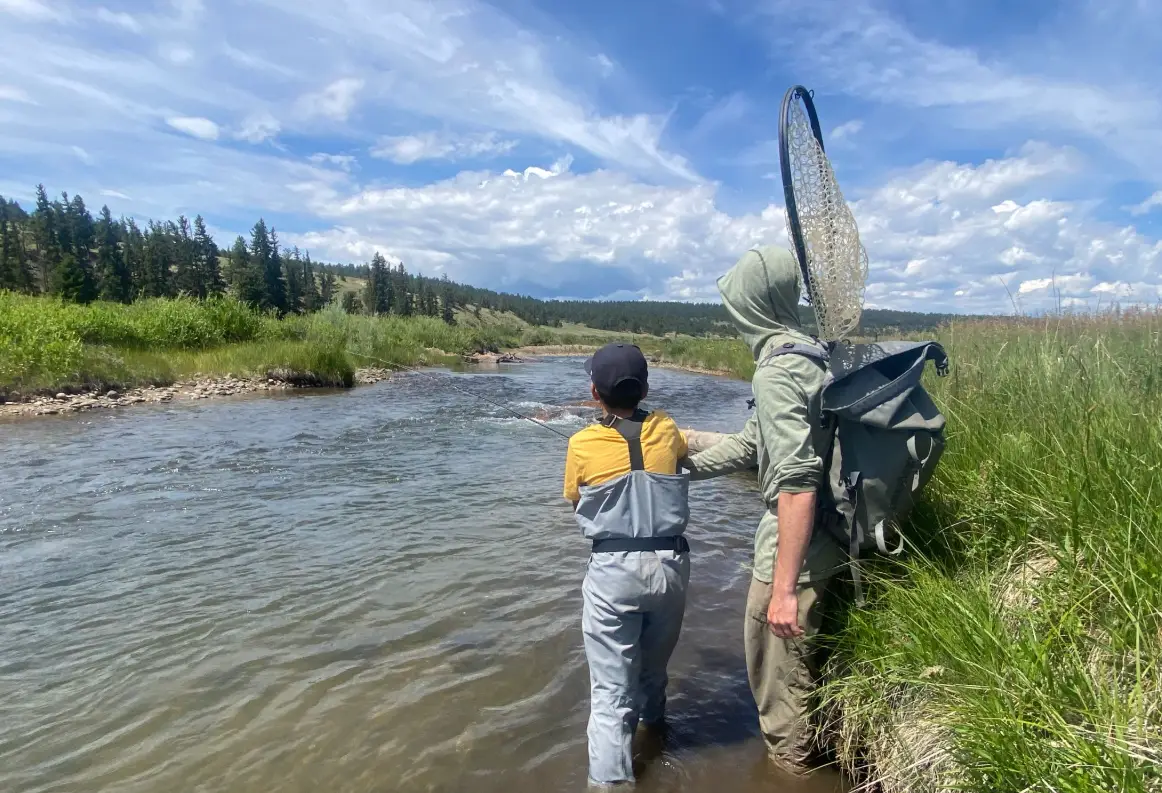
Fall on Colorado’s South Platte system is brown trout season. The fish that spent the summer holding deep, selective, and nocturnal suddenly shift priorities. Hormones take over. Territory matters more than pure feeding efficiency, big fish move. The tactics that worked in July or August stop producing the same way. If you know how to read water and match a hatch, the brown trout spawn forces a different approach: here’s what changes and how to fish it productively without wrecking the resource.
The Biological Shift
What actually happens to brown trout during the fall spawn?
Brown trout spawn in the fall, typically starting when water temperatures drop into the mid-to-high 40s and peaking through October and November in our elevation range. When this happens, the females start to dig redds, cleaning gravel patches in a moderate current. They usually do this in water shallower than three feet, turning onto their side and sweeping with their tails. Males then compete for position.
As spawning begins, both become territorial and less concerned with the usual predator-avoidance calculus that makes browns so difficult the rest of the year. This is why normally nocturnal, structure-oriented fish show up in shallower runs, riffles, and staging areas during daylight. The need to pack calories and establish dominance before the spawn begins is what drives that. When it’s all said and done, these fish are depleted and often drop back into deeper recovery water. That’s key to know: you are not fishing the same fish with the same motivations.
Pre-Spawn: Aggression Over Subtlety
Why do the biggest browns become catchable before the spawn hits?
In the weeks leading into the peak, larger browns become more willing to move to a streamer. This is the window where a well-placed sculpin, leech, or articulated pattern can produce fish that rarely see a fly the rest of the season. Now they aren’t just going for an easy meal to feed them during the spawn. They are reacting to intruders or capitalizing on easy protein before spawning begins.
On our private water and especially stretches like Santa Maria that see migratory fish moving up from Spinney, the pre-spawn period is when the biggest browns become accessible in water that is still fishable without crowding redds. With this in mind, you need a plan for how you will cover the water.
That’s why one of our guides can be a big help. But you want to focus on the edges of deeper runs, the soft water adjacent to faster gravel, and any structure that gives a large fish a vantage point or cover. Once you’re in the water, strip with purpose. Erratic retrieves often outperform the slow, steady swings that work earlier in the year. Now you can still use nymphs and catch fish, but streamer bites are one of your best tools for getting a brown on the line.
During the Spawn: Ethics First, Then Tactics
How should anglers fish responsibly once browns are on redds?
Once fish are on redds, the rules change. Targeting fish actively spawning is poor form and biologically counterproductive. A female that has invested energy into building a redd and depositing eggs is vulnerable. So walking through or repeatedly casting over active redds kills eggs and stresses the adults. It just won’t work if they aren’t interested. So avoid these areas because we want browns to fish for years to come. On private water we manage carefully, this is non-negotiable.
Now, just because we are being respectful of the redds does not mean we stop fishing. It means we adjust. Look for the opportunistic feeders downstream of spawning activity. Dislodged eggs drift, and rainbows, resident browns that are not currently on redds, and post-spawn fish key on them. Egg patterns in the appropriate size and color become high-percentage flies in the soft water and seams just below active gravel. Dead-drift them tight to the bottom. Pair them with a small nymph or midge if the fish are mixed. Continue fishing the deeper runs, undercut banks, and staging pools where non-spawning or recovering fish hold. These fish will still eat, but presentation matters more again. In other words, they are not the aggressive pre-spawn versions.
Practical Adjustments on the Water
What tactical changes actually matter during fall spawn season?
Leader and tippet: Clear fall water and slightly lower flows often demand longer leaders and lighter tippet than summer hopper fishing. Still, when streamers are the play, step up to 0X to 2X so you can turn over bigger flies and manage larger fish.
Timing: Low-light periods remain strong, but pre-spawn territorial aggression expands the productive window into brighter hours than usual.
Observation: Watch before casting. Staging fish and fish holding off redds will show themselves in clear water. Blind casting through known spawning gravel is the fastest way to harm and the least efficient way to catch fish.
Fly selection evolves with the stage: Pre-spawn favors streamers and larger attractors. Peak spawn shifts emphasis to eggs and smaller nymphs in the drop zones. Post-spawn often returns to more conventional nymph and midge presentations as fish recover.
On the North Fork and our South Park properties, the mix of resident and migratory fish means the spawn does not shut the river down, it simply redistributes opportunity. The same structural diversity that produces consistent summer fishing gives fish places to stage, spawn, and recover without every fish being stacked on the same gravel bar. If you want to experience the fall brown trout fishery on carefully managed private water with guides who live this progression every season, reach out to North Fork Ranch Guide Service. We’ll put you on the right water at the right stage of the spawn.