

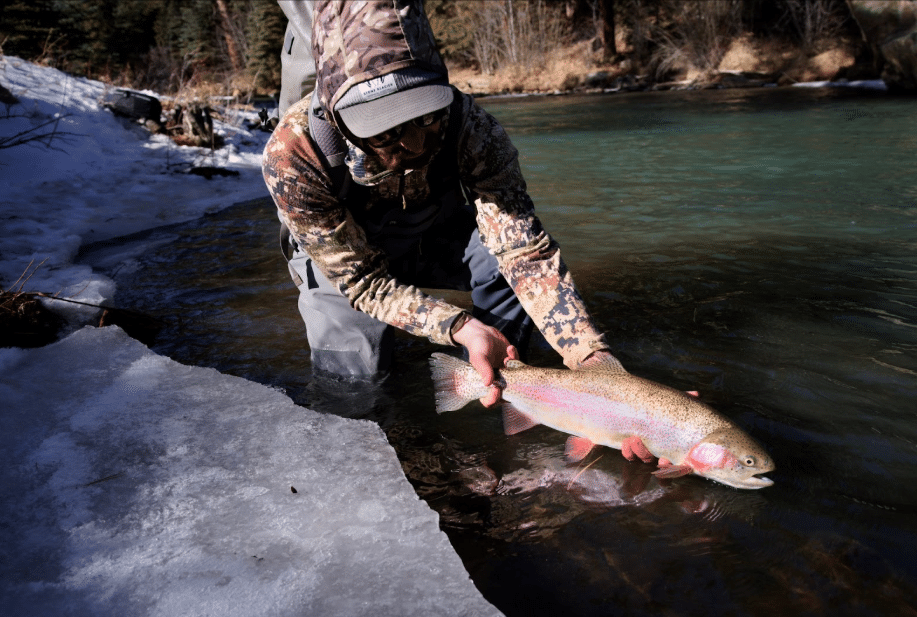
What are the best flies for early season trout fishing in Colorado?
Early spring in Colorado is one of the most overlooked times to fish for trout. While many anglers are waiting for summer hatches, the reality is that April and May can produce some of the most consistent fishing of the year, especially on waters like the South Platte River system.
Snow has begun melting, and trout have spent the winter conserving energy and lying low. As water temperatures slowly rise, their metabolism increases and they begin feeding more regularly. That is when the first meaningful spring insect hatches for Colorado trout begin to appear.
If you are planning a trip with North Fork Ranch Guide Service, or simply exploring Colorado fly fishing in early spring, understanding these hatches and the flies that imitate them can help you get the most out of your day on the water.
Midges: The Backbone of Early Season Fishing
Why are midge patterns so important for spring trout fishing?
If there is one hatch you can count on during early spring, it is midges. These insects are active year round in Colorado tailwaters, making them a reliable food source when few other bugs are present.
During April and early May, trout often feed heavily on these tiny insects throughout the day. Anglers fishing the South Platte River for trout frequently find success drifting small midge patterns beneath an indicator or as part of a two fly nymph rig.
Some of the most productive Colorado midge fly patterns include:
- Zebra Midges
- Mercury Midges
- Black Beauty Midges
- RS2 Midges
These flies are typically tied in sizes 18 to 24. Presentation is critical. A clean, drag free drift through slower seams and tailouts can make all the difference.
Blue Winged Olives: The First Major Hatch of Spring
When do Blue Winged Olives hatch in Colorado?
As weather patterns stabilize and cloudy spring days arrive, anglers start watching for one of the first major mayfly hatches on the South Platte River: Blue Winged Olives.
These small mayflies are famous across the West for hatching in cool, overcast conditions. When BWOs begin emerging, trout that have been hugging the bottom all winter often slide into feeding lanes to intercept insects drifting toward the surface.
During April and May, BWO hatches in Colorado can create excellent dry fly opportunities.
Effective BWO fly patterns include:
- Parachute BWO
- Sparkle Dun
- RS2 Emergers
- Barr’s Emerger
Most of these flies are tied in sizes 18 to 22. Fishing them in slower water where trout can comfortably rise often produces the best results. When a BWO hatch gets going, the fishing can shift from quiet to incredible very quickly.
Stoneflies: Big Meals in Fast Water
Why do trout target stonefly nymphs in early season?
While midges and mayflies dominate the early season hatch chart, trout are always looking for larger meals when available.
Stonefly nymphs live along the rocky bottom of rivers and are frequently dislodged during changing flows or early runoff conditions. Trout recognize this opportunity and rarely pass up a drifting stonefly.
Fishing large stonefly nymph patterns in Colorado rivers can be especially effective when spring flows begin to rise.
Popular stonefly patterns for the South Platte River include:
- Pat’s Rubber Legs
- Kaufmann Stone
- Wired Stonefly Nymphs
These flies are typically fished in sizes 6 to 10 and often serve as the anchor fly in a two fly rig. Their weight also helps your rig reach deeper water where trout tend to hold during early spring.
Don’t Overlook Emergers
One of the most common mistakes anglers make during early season Colorado fly fishing is focusing only on nymphs or dry flies while ignoring the transition stage.
Emergers represent insects moving from the bottom of the river to the surface. During this stage, trout often feed aggressively just beneath the surface film.
Patterns such as RS2s, soft hackles, and small mayfly emergers can be incredibly effective when trout are feeding just below the surface but are not fully committing to dry flies.
Fishing these patterns just under the film can trigger surprisingly aggressive takes from trout during early spring hatches.
Ready to Experience Early Season Fishing on the South Platte?
Early spring is one of the most rewarding times to fish the South Platte River system in Colorado. With active trout, reliable hatches, and fewer crowds on the water, it can offer some of the best fishing of the year.
If you want to make the most of these early season Colorado trout fishing opportunities, consider booking a guided trip with North Fork Ranch Guide Service. Our guides monitor hatches, river conditions, and fly patterns daily to help anglers stay dialed in throughout the season.