

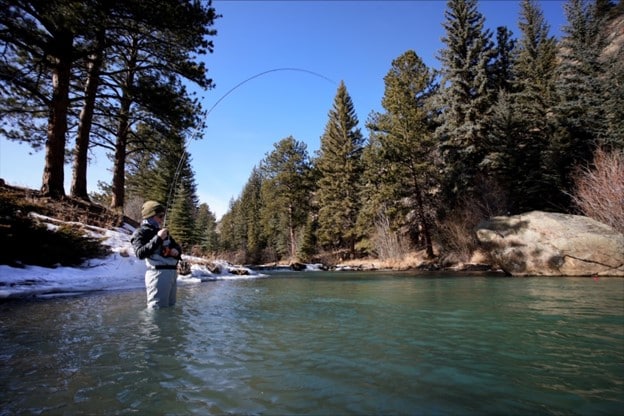
Why should anglers consider fly fishing during the winter months?
Frozen winter rolls in, and a lot of us put our fly rods away in waders and storage for the season. We get it, there’s hesitation around winter fly fishing. Cold water, icy conditions, and uncertainty about fish activity make many anglers wonder if it’s really worth the effort.
But the truth is, winter fly fishing in Colorado can offer some of the most rewarding and unique experiences of the year, especially when you’re chasing trout on low-pressure, private water with North Fork Ranch Guide Service.
Pros of Winter Fly Fishing
What are the benefits of fly fishing during the winter?
Winter offers distinct advantages that many anglers genuinely appreciate. One of the biggest is predictability. During warmer months, trout spread across riffles, pocket water, fast seams, and shallow gravel bars. But when water temperatures drop, trout concentrate almost exclusively in deep, slow-moving water where they can conserve energy.
This seasonal shift makes Colorado winter fly fishing far more efficient. Instead of covering miles of water, experienced anglers can focus on a handful of prime lies – soft edges, deep holes, tailouts, and long, gentle runs. Trout behavior becomes consistent, and reading water becomes clearer.
Trout are also far less aggressive in winter. Their metabolism slows, making them unwilling to chase flies or move far for food. Presentations must be precise. Depth matters, often within inches. and any drag or unnatural movement will likely be refused. Winter rewards patience, accuracy, and refined technique.
That said, winter fishing does carry more risk than a mild spring or summer day. Cold conditions demand preparation, awareness, and respect for the environment but for those willing to embrace it, the payoff is real.
Managing Cold Conditions on the Water
How can anglers stay comfortable and safe while winter fly fishing?
Cold weather introduces challenges, but there are ways to manage them. Reels and fly lines can ice up in extreme conditions, but simple tools, like specialized line treatments and oils, help keep gear functioning properly.
For many anglers, the biggest issue is cold hands. A simple solution is wearing latex gloves under fingerless gloves. The latex layer keeps fingers dry and blocks wind, while the outer gloves retain warmth and allow you to tie flies, strip line, and manage gear. There are effective ways to counter the cold, you just need to be prepared.
Tips for Successful Winter Fly Fishing
What techniques work best for winter trout fishing?
Slow your presentation. Trout conserve energy in winter, so flies should drift naturally and at the right speed. Dead-drifting is essential, and subtle takes are common.
Target deep, slow water. Focus on tailouts, inside bends, deep pools, and long runs where trout gather to preserve heat and energy.
Use smaller flies. Midges, small nymphs, and simple winter patterns often outperform larger offerings during cold months.
Stay warm and safe. Proper layering, quality gloves, and awareness of changing river conditions are critical for safe winter fly fishing.
Fish during the warmest part of the day. Late morning through early afternoon typically provides the best feeding window.
The Deeper Reward of Winter Fishing
Why do experienced anglers value winter fly fishing so highly?
Winter fly fishing isn’t about numbers, warm weather, or easy days. It’s about stepping into a slower rhythm. The river changes. The fish change. And anglers must change with them.
In that adjustment comes something uniquely rewarding. Winter sharpens focus and refines technique. The cold strips away distraction, leaving only you, the river, and the steady rhythm of cast and drift. Add snow-covered banks, quiet water, and empty river corridors, and winter becomes one of the most peaceful times to be on the water.
Ready to Experience Winter on the River?
If you’re curious about guided winter fly fishing in Colorado, North Fork Ranch Guide Service offers access to private, low-pressure waters with expert guides who know how to make winter both productive and enjoyable. Don’t wait for spring – some of the best fishing happens when the crowds are gone.