

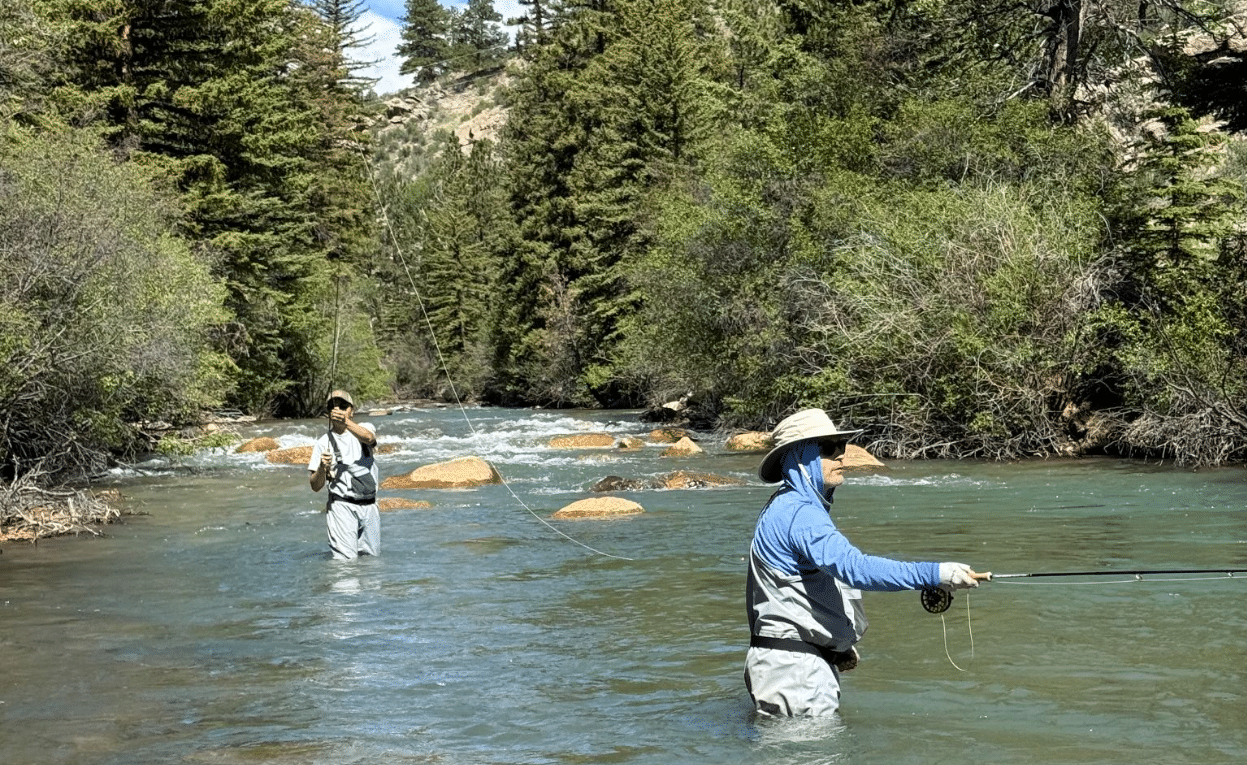
There’s a version of a fishing day most of us have lived. You’re on the water early, moving fast, covering ground, convinced the fish are always just around the next bend. You work through a run in ten minutes, decide it isn’t worth your time, and push on. By afternoon, you’ve covered two miles of river and caught nothing, and you can’t quite figure out why.
The river wasn’t the problem.
Some of the best days on the river don’t look productive from the outside. They’re slow, methodical, almost quiet. You pick a stretch of water, and you stay with it. You watch before you cast. You let the morning settle around you before you make your first move. More often than not, those are the days that produce the ones you remember long after the fast ones blur together.
Let the River Dictate the Pace
Why does slowing down help you catch more trout?
We have all been there. You get a day on the water, and nothing is working. You change flies, and still nothing works. So, you start trying to cover more water. More water feels like more opportunity.
But trout live in specific parts of the river for specific reasons: current speed, depth, food availability, and overhead cover. Now you need to use that info to target them, which means slowing down.
Slowing down means you start to read the water instead of just walking through it. You notice the subtle current seam along the far bank, the foam line that’s been collecting insects all morning, the depression behind a mid-stream boulder where a fish has been sitting undisturbed for hours.
You can’t see any of that if you’re already fifty yards downstream.
Let the river tell you where to look. It’s been doing this longer than you have.
Reducing Pressure on Trout
How does angler pressure affect trout behavior?
Trout are wired for survival. They’re attuned to shadow, vibration, and any disturbance in their environment that doesn’t belong.
An angler moving quickly through a run, wading fast, casting repeatedly to the same water, and repositioning constantly puts fish down. Not just the fish you were casting to. Fish throughout the run go on alert, and once they do, they stop feeding.
Slowing down changes your entire physical relationship with the water. You wade more deliberately. You stop and study before you step. You give each run time to recover if you’ve disturbed it.
As fish settle back into their feeding lanes after your approach, they become far more catchable than fish that are keyed in on you as a threat.
This is one reason guided fly fishing trips on the South Platte River often emphasize observation and patience over constantly covering water.
Improving Your Presentation
Why is presentation more important than making more casts?
Sometimes you need to catch less. That’s a piece of advice you hear in fly fishing, and it sounds like it doesn’t make sense, but it does.
Every cast that drags, splashes awkwardly, or lands in the wrong place is information the fish receives before your fly does.
Slowing down gives you time to plan the cast: to identify the exact lane you want to hit, to think through your mend before the line lands, and to set up at the right angle so drag isn’t fighting you from the first second of the drift.
A single well-executed cast into the right piece of water outperforms a dozen rushed ones every time.
The fish didn’t get selective because they’re difficult to catch. They got selective because they’ve seen many bad presentations.
The Mental Reset
How does slowing down improve your fly fishing experience?
There’s something else that happens on slower days that doesn’t show up in the catch count but matters just as much.
Your mind settles.
The part of your brain that’s been managing schedules, decisions, and everything waiting back at the truck goes quiet. You’re watching a dry fly ride a current seam, and there isn’t room for much else.
That quality of attention, the kind a slow day on the river forces on you, is increasingly rare. Most people don’t get enough of it.
And it turns out it makes you a better angler because fly fishing has always been more about observation than action.
The Full Experience
What makes a memorable day of fly fishing?
The best days on the South Platte River aren’t always the days with the highest fish counts.
They’re the days when you noticed the osprey working the far bank, when you figured out a hatch on your own, or when you stood in one run long enough to watch a big brown trout finally commit to your fly after ignoring it four times.
That’s the stuff that stays with you.
Colorado fly fishing was never designed to be rushed. The river doesn’t care about your timeline, and once you stop fighting that, the fishing often gets better.
Slow Down and Experience the River the Way It Was Meant to Be
At North Fork Ranch Guide Service, we believe some of the most rewarding moments in fly fishing happen when anglers slow down, observe, and truly connect with the water. Whether you’re new to the sport or a seasoned angler looking to refine your approach, our experienced guides can help you unlock the rhythms of the river and discover what makes the South Platte River trout fishery so special.